
A practical introduction for British visitors
Calais, France: what to know before you visit
After leaving the ferry or LeShuttle, it is easy to join the motorway and miss Calais completely. But the town has useful shopping, a large beach, restaurants and several worthwhile stops within a relatively compact area. The key is knowing which part of Calais suits your crossing and the time you have.
Last checked: September 2026
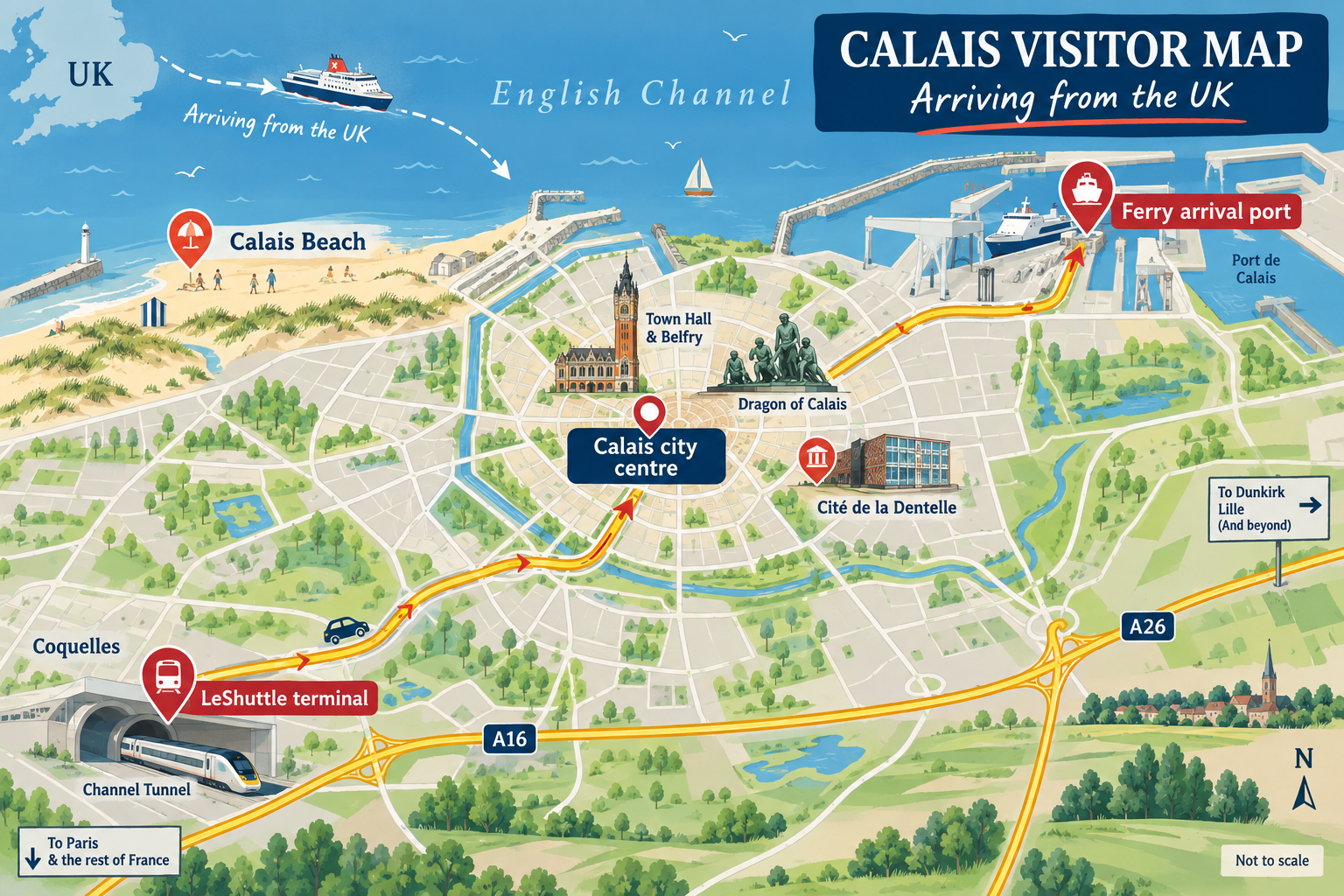
First, understand how Calais is laid out
“Calais” can mean several different areas. They are close together by car, but they offer very different kinds of stop:
- The ferry port: on the eastern side of Calais, with direct access to the A16.
- Calais Nord: the older central area around Place d’Armes, restaurants and the watchtower.
- The Town Hall area: around the belfry, Parc Saint-Pierre and the main railway station.
- Calais Beach: the broad seafront west of the port, with the Dragon of Calais and beach facilities.
- Coquelles: outside central Calais and home to LeShuttle, Cité Europe and Channel Outlet.
- Mi-Voix: a convenient retail area between the port and central Calais.
If you only have an hour, moving between several of these areas wastes much of your visit. Our Calais in one hour guide is designed around that constraint.
After arriving by ferry
Ferry passengers arrive on the eastern side of town. Once you leave the port, the most useful choices are usually central Calais, the beach or the nearby Carrefour Mi-Voix shopping area.
For a very short stop, decide before leaving the port whether your priority is food, fresh air or shopping. Following signs at random can put you onto the motorway before you have seen any of Calais.
If you are still comparing crossings, see the independent overview of ferry routes serving Calais.
After arriving through LeShuttle
LeShuttle does not bring you into central Calais. Vehicles leave the train in Coquelles, close to Cité Europe, Channel Outlet and several large retail parks.
This makes shopping the easiest immediate activity. Central Calais and the beach are still reachable by car, but they require a separate drive away from the terminal area.
Read our just arrived in Calais guide for realistic first stops, or visit Chunnel.co.uk for more information about travelling through the Channel Tunnel.
What is central Calais actually like?
Central Calais is not one perfectly preserved historic district. It is a working northern French town shaped by the port, post-war rebuilding and cross-Channel traffic.
The most attractive pieces are spread between the Town Hall and belfry, Parc Saint-Pierre, Calais Nord and the seafront. That makes the town more rewarding when you know where you are going.
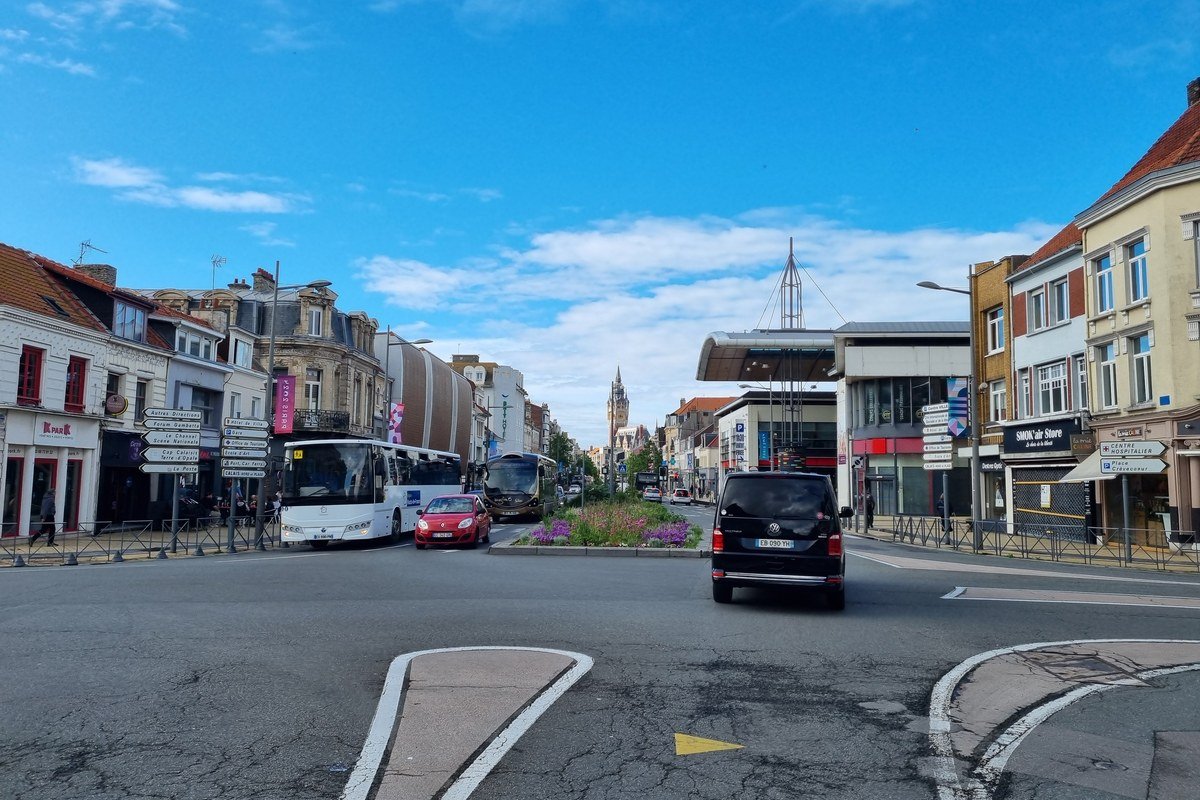
Five useful parts of Calais
1. Cité Europe and Coquelles
This is the practical choice for a large Carrefour hypermarket, indoor shops, restaurants and easy parking. It is particularly convenient after LeShuttle.
Read our Cité Europe guide before treating it as a sightseeing stop: it is useful, but it is still a modern shopping centre.
2. The Town Hall and belfry
The Town Hall is one of the most recognisable buildings in Calais. It stands beside Parc Saint-Pierre and close to the railway station, making it a sensible starting point for a short walk through central Calais.
3. Calais Nord
The streets around Place d’Armes and Rue Royale contain many of the more useful restaurant and evening options. This is normally a better destination for a sit-down meal than the immediate port area.
4. Calais Beach
The beach provides the quickest contrast with a long drive or crossing. There is a broad promenade, a large sandy beach and views across the Channel in clear weather.
See our Calais beach and seafront guide before deciding whether it fits into your stop.
5. Mi-Voix
The Mi-Voix retail area is less of a destination than Cité Europe, but it can be more convenient for ferry passengers who want groceries without driving across to Coquelles.
How much time do you need?
Under one hour
Choose one practical stop: a supermarket, a bakery, a short beach visit or one landmark. Do not attempt central Calais, the beach and Coquelles in the same hour.
Start with what to do in Calais in under one hour.
Two to four hours
This is enough time for a proper lunch plus either shopping, the beach or a compact town-centre walk. It is probably the most useful timeframe for a Channel day trip.
See our Calais in two to four hours itinerary.
A full day
With a full day you can combine the Town Hall, Calais Nord, the seafront and a deliberate shopping stop. You can also slow down enough to have lunch without watching the clock throughout the meal.
Follow our one-day Calais itinerary.
Shopping after your crossing
Shopping remains one of the strongest reasons for British visitors to stop in Calais. The useful options range from hypermarkets and wine warehouses to outlet stores and smaller city-centre shops.
Cité Europe is the obvious all-in-one choice near LeShuttle. Auchan offers another large hypermarket experience, while Carrefour Mi-Voix can be more convenient from the ferry port.
Compare them in our main Calais shopping guide.
Where should you eat?
For a proper meal, look beyond the immediate terminal areas. Calais Nord and the seafront have more character and a better concentration of independent restaurants.
Cité Europe is easier when your schedule matters more than atmosphere. It provides several casual options, straightforward parking and quick access back towards LeShuttle.
Our Calais restaurant guide explains the useful areas and the restaurants worth checking.
Driving in Calais
The main challenge for British drivers is not distance but orientation. Port traffic, motorway entrances, roundabouts and retail exits can make short journeys feel less obvious than they appear on a map.
- Drive on the right immediately after leaving your terminal.
- Set your destination before moving away from the port or LeShuttle.
- Do not rely on “Calais centre” as the destination if you want a specific shop or restaurant.
- Allow extra time to refuel, park and find the correct terminal entrance.
- Check live navigation for roadworks and traffic disruption.
Visiting without a car
Central Calais can be explored on foot, particularly around the station, Town Hall and Calais Nord. The beach is farther away but still accessible with local transport or a longer walk.
Coquelles and Cité Europe are separate from the central sightseeing area. Without a car, combining the centre, beach and major shopping zones requires more planning.
Before returning to Britain
Make your final stop fit your departure terminal. Coquelles is the natural final area for LeShuttle passengers, while ferry travellers may prefer central Calais, the beach or Mi-Voix before returning to the port.
Use our before your Calais crossing guide to choose a stop that leaves a sensible margin for check-in.
Common mistakes
- Assuming LeShuttle arrives in central Calais.
- Trying to visit too many separate areas during a short stop.
- Expecting every restaurant and independent shop to stay open all afternoon.
- Leaving shopping until Sunday evening without checking opening hours.
- Planning around driving time while forgetting terminal check-in.
- Using an illustrated visitor map as a substitute for live navigation.
Frequently asked questions
Is Calais worth visiting?
Yes, particularly when you choose activities that suit a short cross-Channel visit. Calais is strongest for shopping, eating, the beach and practical breaks rather than for a long list of famous sights.
Can you see Calais in a few hours?
Yes. Two to four hours is enough for lunch combined with one other activity, such as shopping, the beach or a walk through central Calais.
Is Cité Europe in central Calais?
No. Cité Europe is in Coquelles beside the LeShuttle terminal, several kilometres from central Calais and the beach.
Is Calais easy to reach from the ferry port?
Central Calais is close to the port by car, but port roads and motorway exits can be confusing on a first visit. Set a specific destination before leaving the terminal.
Should I visit Calais before or after my crossing?
Either can work. After arriving, you have less pressure from a departure deadline. Before crossing, keep your final stop close to the relevant terminal and allow a generous check-in margin.
Opening hours, road conditions and terminal procedures can change. Check your operator, live navigation and the relevant venue before travelling.